The travesty of ICE’s presence in Minnesota is so huge, I’ve had trouble writing about it. I’m not alone; many writers are choosing to escort kids to school or pack boxes of food instead. Urgent needs are everywhere. Thank goodness some writers are finding their voices, though. A friend of mine keeps an “occupation journal,” chronicling the extraordinary disruptions in her days. The literary community is sending “Letters from Minnesota” to LitHub, and a speedy group has published an anthology called Ice Out: Minnesota Writers Rising Up. These stories need to be heard.
I’ve discovered that the best way into describing the enormity of this moment is with small things. I’m personifying ordinary objects—the Sunday newspaper that stopped coming when ICE arrived in town because my delivery person has either been deported or is in hiding, the frozen roses at Renee Good’s memorial site, the whistle now on my keychain—because they seem manageable; they provide an onramp into complexity. Here, for example, are a few sentences I wrote about my wedding ring:
I hear honking and whistling out on the street, but before I throw on a coat and dash out the door, the image of ICE cutting wedding rings off detained witnesses flashes in my mind, so I wrangle mine from a swollen finger and place it in a dish on the kitchen counter. While I’m gone it sits in the empty house, mystified.
My wedding ring resting where it doesn’t belong communicates a bit of what I cannot: The disorientation of having the federal government’s violent presence in my neighborhood. When words fail me, images are stepping up to the work.
I’m immensely relieved, and amazed. Objects speak. They vibrate with meaning, with political implications, with values, with relationships. If writing has a physical law governing it, it’s this: If you want to touch on the universal, describe the particular. The small evokes the large. Details carry import. Specifics give lively access to vast shared experience.
While my literary snapshots help me begin recording the intensity of this period, I also see the same physical law at play everywhere in my city. Small gestures (of kindness, of witnessing, of accompaniment, of care) evoke the profound significance of our interconnectedness. Bringing soup to a neighbor who can’t leave her home for fear of being abducted doesn’t rid our country of authoritarianism, but it powerfully invests in neighborliness, and, like describing an ordinary object, it’s something any of us can do. I’m reminded of the title of Arundhati Roy’s novel, The God of Small Things. When details bow down in service, they shine with light.
–Elizabeth
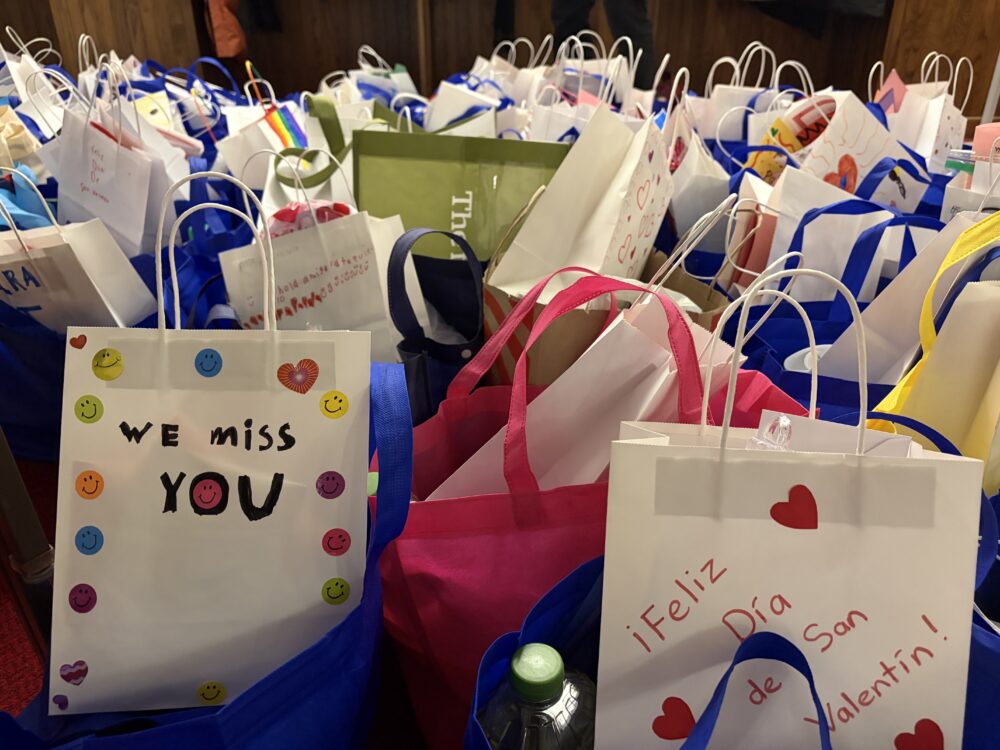
The above photograph is of Valentine bags going home to elementary school children in hiding.