Tag: Audience

  • The Village in Your Book

    The Village in Your Book

    It takes a village to raise a child, and, judging from acknowledgement pages and how my writing group has saved my ass innumerable times, it takes a village to write a book. In addition to the obvious participants (your writing teachers and colleagues, your beta readers, your agent or publisher or local copy store clerk), we’re dependent on supportive partners, babysitters, the barista fueling our endeavors, the friends willing have us bounce ideas off of them or loan us their cabins. Not to mention the developers of word processing programs and workers in paper factories and those who make machines to squirt ink in our pens.

    But wait! What about the host of internal voices contributing to your creation? Your seventh grade English teacher who thought you were a great poet, your grandmother who was your biggest fan, your best friend who kept you company while you scrawled lines during lunch? What about the authors of the books you devoured, who showed you how stories transport and stretch and fuel their readers? For that matter, consider the people who fostered your courage and imagination, your reflective capacities, your resilience and patience—qualities without which your writing life wouldn’t exist. Most of what makes you you comes from your village. Each one of those people contribute to what emerges from your pen.

    Actually, “village” may be an underestimate. If we throw in any audiences, real and imagined, dead, alive, and unborn, who populate our writing life, we need a city. So much of writing is conversation, with various parts of ourselves (my current self in dialogue with my younger self or my better self conversing with my worst self, for instance) or with broader cultural movements, or with readers. Except that, until our pages land in a reader’s hands, that reader is entirely conceptual. We anticipate their questions. We play to their tastes. Before our work ever meets flesh-and-blood readers, they’ve participated in our composition.

    The word “person” comes from the Latin verb per-sonare, literally “sounding through.” Hundreds if not thousands of people “sound through” us every time we put pen to page. Isn’t this marvelous?! Writing is how the vast chorus around and inside of us is able to sing.

    —Elizabeth Jarrett Andrew

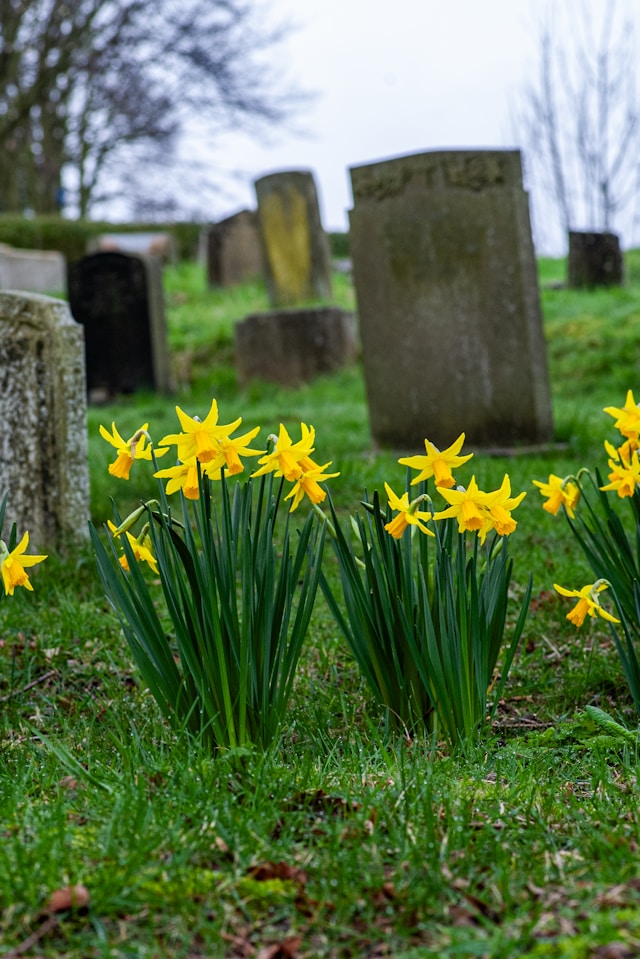
    Photo by László D. on Unsplash
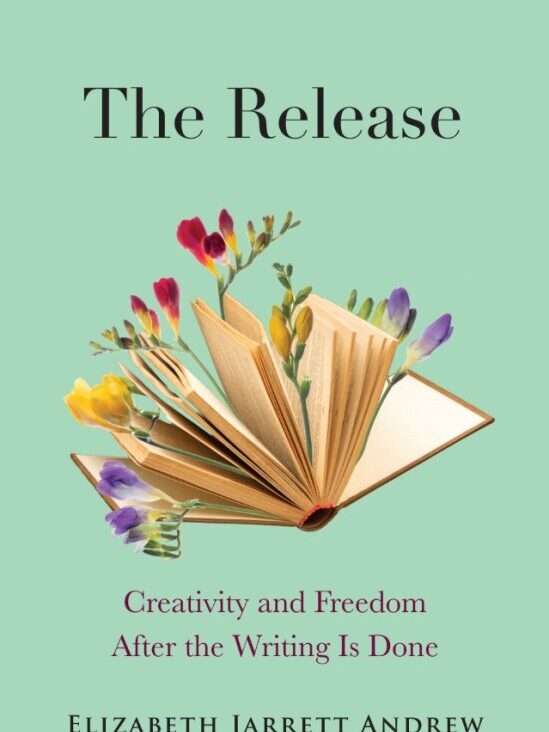
    If you’re interested in learning more about this broader understanding of audience, please check out my latest craft book, The Release

  • Last Regrets

    Last Regrets

    On a weekly basis, one client or another will tell me, “If I wind up on my deathbed without finishing this project, I’m seriously going to regret it.” This population of writers is, admittedly, peculiar; they share an intense enough degree of passion, compulsion, or vocation about writing to pay me good money. Or perhaps they seek me out because they sense in me a similar drive. My current projects, a grandiose credo articulating once and for all my metaphysics and a middle grade novel about a puppet theater, I care about with mama-bear furiosity. Were death imminent, along with cherishing my dear ones, soaking up the natural world, and consuming chocolate with abandon, I’d plug away at these projects.

    Why? What is so important about creative work?

    When I was in my twenties drafting Swinging on the Garden Gate, I would have said I wanted evidence of my existence to outlast me. A published book would become my legacy—a means for my personhood to continue. 

    Now that the memoir has circulated for twenty-plus years, this reason has faded. The book itself is just an object. Sure, it comes alive when it moves a reader, but my desire to effect change like that, while certainly real, isn’t strong enough to warrant deathbed regret.

    I also would have said that writing my story allowed my otherwise hidden internal life to become evident on the page. Before I died I wanted to be known, not in the sense of being famous but rather being seen by others in the full complexity of my personhood. Amazingly, the book did that and more: It helped me manifest more completely that rich complexity in my life. I came out bisexual and as a spiritual human being, to myself as to others. The book birthed me. On some unconscious level, did longing for that transformation drive me to write?

    These days I know that who I become for having written is as significant a contribution as any product that goes out into the world. I suspect that need to finish my credo and that middle grade novel because both contain some essence of life I’m eager to meet. At the end of my days, perhaps fulfillment will come not just from leaving my unique fingerprint on creation but from growing as much as I possibly can into that unique selfhood. Writing is my means.

    – Elizabeth Jarrett Andrew

    Photo by John Thomas on Unsplash

  • Others’ Eyes

    The fastest way to see our writing with fresh eyes is to look through the eyes of a reader.  Established authors might profess that they don’t reveal their work to anyone until it’s done, or complain about writing workshops producing works created by consensus.  But writers who are still learning the craft need exposure to the dirty inner workings of writing; they need to see others struggling with their same questions, and they need to learn from others’ mistakes and successes.  It’s possible to receive nourishing, instructive feedback on a manuscript-in-progress.

    Here are some thoughts on giving and receiving feedback that will benefit your work:

    1.  Be careful not to share your work prematurely.  Have you allowed yourself plenty of time in that cloud of safety and unknowing?  Only solicit feedback when you’re genuinely curious about developing your piece.  If you’re looking for someone to endorse your creative process—to say “This work is valuable!”—don’t share it.  No one has the power to validate creativity.

    2.  Choose your audience carefully.  Writing is work; you need work colleagues, not cheerleaders.  The best people to respond to creative work mid-draft are those who are seriously committed to the creative process themselves.  Find peers at your level of experience and teachers you respect.  Note that even excellent, successful authors can lack the skills needed to respond constructively to creative writing, and that the best teachers are not always successful authors.
    Avoid sharing your work with family or friends.  Attachment makes family members, especially parents, miserable critics.  Mom wants to see us succeed too badly; Dad is too worried about what others will think; neither has any objectivity because love and pride and self-consciousness are in the way.
    Another way to say this:  Find readers who can respond to your writing as separate from yourself.  My colleague Cheri Register, an excellent reader, says, “My business as a friendly critic is inherently respectful:  A direct, cathartic cry of sorrow calls for consolation, but a poem offered for critique deserves to be read as a poem.”   The best readers open up possibilities for your text and for personal growth.  If you stop writing after receiving feedback, ask yourself, “Have I stopped because I’m avoiding growing as a person or writer?  Or have I stopped because I’ve allowed this reader’s assessment to knock down my creative process?”  If you answer yes to the latter, fire your reader.

    3.  Ask for stage-appropriate feedback.  Readers of work-in-progress need to know where you are in the development of your work.  Early on, ask readers the big questions.  What is this piece about?  What might it be about?  What themes do you see rising up?  What are you curious to have me pursue?  Midway through, ask questions about cutting and expanding, thematic unity, organization, character development.  Toward the end, ask for feedback on sentence structure, word choice, and other suggestions that will clean up the manuscript.

    4.  Remember that your writing has become a thing.  Others’ responses are addressed to your work, not to you.  When a classmate asks, “When did this scene take place?” she is asking the question of the text.  Write the question down.  Later, consider whether or not to address the question in your writing.  The work, as an independent entity, must answer for itself.

    5.  Feedback matures with age.  For this reason, take notes while others discuss your work.  Initial emotional reactions to comments are not always trustworthy.  Allow some time to pass; reread your manuscript; take notes in your journal.  Then reevaluate the comment.

    6.  Develop your inner tuning fork.  The best feedback resonates—it feels true.  Always assess others’ comments against your own sense of the piece’s heartbeat.  Your job isn’t to address every comment you’re given; it’s to use these comments to help you see your piece with fresh eyes.

    –Elizabeth Jarrett Andrew