Category: Uncategorized

  • The Writer’s Village

    The Writer’s Village

    Writers say it takes a village to write a book. Look at any acknowledgement or dedication page for evidence: This breed of introverted, solitude-craving, nose-in-a-novel, socially misfit authors is beholden to community—for inspiration, research help, revision suggestions, editing, publishing, marketing work, babysitting, cheerleading… Each individual’s creative act is invariably intertwined with many lives. Recognizing this keeps us grateful, and humble.

    For the past twenty-five years, my acknowledgement pages have honored the four members of my writing group. They rescue me from embarrassment, push me to grow, hand me the titles I most need to read, notify me about publication opportunities, celebrate my launches, and with their steady collegiality keep me going. I’d be a lesser writer without them—and an unhappier person.

    Because I’m so thankful, and because I want every writer to feel the support I’ve known, I’m perpetually bringing writers together. Spawning groups from classes, offering an evening of speed dating for writers, facilitating then launching groups, posting resources for feedback groups and contemplative writing circles, hosting the Eye of the Heart’s online writing community and writing group incubator sessions, and even keeping a spreadsheet of writers seeking other writers—I feel like village match-maker!

    These days there’s a new urgency behind my impulse. The collapse of our civic and religious institutions and the rise of virtual reality have increased our isolation. To be healthy, to be resilient in the face of climate change and civil unrest, to uplift the creative spirit in a devastatingly automated society, we need one another. More than that: We need to remember that we are one another. My wellbeing is bound up in your wellbeing, and in our government’s, and in the earth’s. Desmond Tutu calls this ubuntu: “A person is a person through other persons… It is the opposite of ‘I think, therefore I am.’ Ubuntu means that my humanity is inextricably bound up in yours.” The philosopher Beatrice Bruteau calls it “communion consciousness.” We are community. It also takes a village to write a book because writers contain whole villages inside them. 

    What difference does having “communion consciousness” make? Participating in community becomes a practice. This is hard work; we have to show up, be vulnerable, invest time and money, move through conflict, connect across difference. Sometimes we need to make sacrifices. Always we need to open our hearts to community’s gifts. As we approach the new year, I invite you to make community a central part of your creative life. We’re more apt to change our lives, our writing, and our world if we do it together. 

    —Elizabeth Jarrett Andrew
    Photo by “My Life Through A Lens” on Unsplash

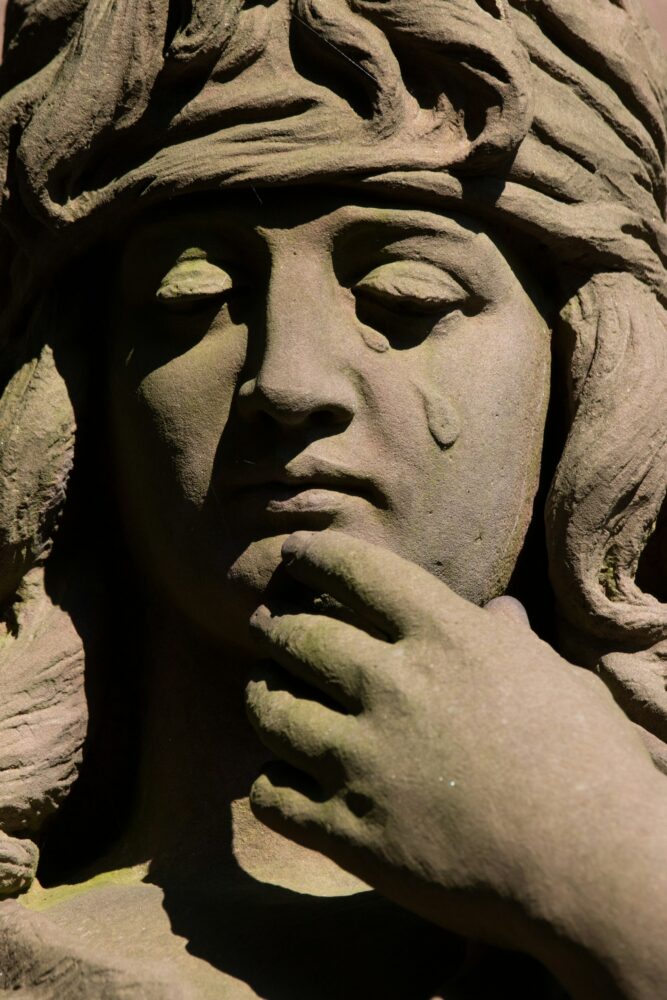
  • Embracing the Writer’s Tears and Surprises

    Embracing the Writer’s Tears and Surprises

    I taught my first spiritual memoir class when I was twenty-eight, still in graduate school, and two years before my first book was released. Every one of my students was older than me. When I gave them a prompt, invariably someone ended up in tears. I was astonished; this had never happened in my MFA workshops! Nothing in my teacher training or literary education had prepared me to support my students as creative writing rearranged their inner lives. 
     
    Despite the fact most writers write as a way to grow aware of our thoughts, feelings, beliefs, and imaginative potential; despite the revelatory joy of writing which drew us to the page in the first place; despite Robert Frost’s wisdom, “No tears in the writer, no tears in the reader,” the literary world keeps an arm’s length between the text and the writer’s being. When commenting in writing workshops, we MFA students were taught to focus on craft. Addressing content, much less the writer’s intent or process, was too dangerous for the university classroom. Some professors went so far as to preach Roland Barthes’ theory that “the author is dead”; meaning-making is entirely in the hands of the reader, and what happens within the writer is irrelevant. In the academy, the admission that writing felt therapeutic was considered shameful. We learned to keep our mouths shut.
     
    But I never stopped cherishing writing’s transformational surprises. When my first students, ordinary adults not yet indoctrinated into the emotional ethics of writing workshops, started weeping as they wrote and shared, I loved them for it. They exposed what I’d suspected all along—that creative energy isn’t unidirectional, moving from writer to page to reader, but rather it’s radial, influencing everyone in its proximity. Creativity isn’t didactic, one source spouting words into another’s ear; it’s dialectical, a conversation between self and source, between craft and meaning, between writer and reader. At writing’s best, all parties are changed as the writing changes. Creative potential abounds.
     
    Now I say boldly and with conviction: Creativity has the power to transform hearts and communities. Three years ago, I started Eye of the Heart Center for Creative Contemplation with three women who share this understanding; through our programs, we’re generating a culture where the arts and art-making are honored for their contemplative dimension. Creative practice changes us for the better and connects us in ever more meaningful ways. The art that emerges has more integrity and, I believe, more influence. Often it’s more artful. Certainly the world is better for it.
     
    I’m infinitely grateful to have companions in this effort—and invite you to join us. What began as a loose collective is becoming a real organization. Next year we’ll hire our first administrator. On November 14, we’re gathering in person to celebrate the abundance of creative, intuitive, and healing gifts moving through our work. You’re invited! We’re also hosting our first online silent auction, with services (including an hour with a publishing professional), original art from our members, and fun gifts. Please support our creative, intergenerational, multi-lingual programming by bidding on items or making a tax-deductible contribution.
     
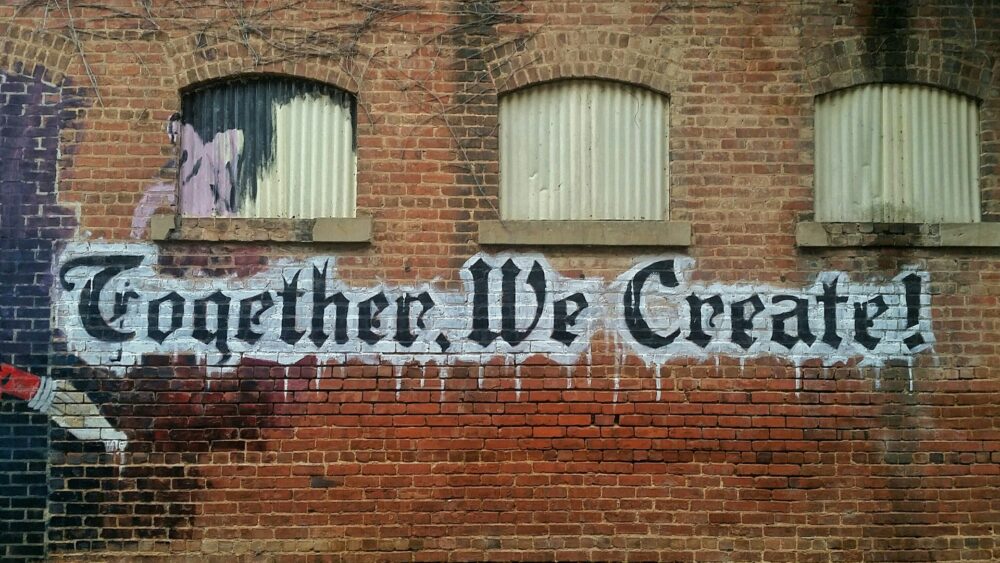
    Together we can center compassion and connection in our writing world.

    —Elizabeth Jarrett Andrew
    Photo by Marek Studzinski on Unsplash

  • The Surprisingly Sacred Invitation of AI

    The Surprisingly Sacred Invitation of AI

    In a bizarre twist of fate, I’ll be the recipient of a chunk of change thanks to a class action suit.  Anthropic is a company that, without permission, used thousands of books, including Swinging on the Garden Gate, to develop its AI product. Presumably you can now tell Anthropic’s tool to write a memoir in the style of Elizabeth Jarrett Andrew and out will come not just my voice but newly generated personal narrative drawn from the ether.

    In one gulp, AI has swallowed literary artistry. Plagiarism is built into the system. The few thousand dollars paid to authors who’ve been harmed does little to compensate for the long-term damage. Our voices—the textual equivalent of our fingerprints—have been stolen, and there’s no getting them back.

    In the aftermath I’m wrestling with two irrevocable facts:  AI is here to stay, and the results AI spits out are horrifyingly good. Cheap, easy to use, instantaneous, AI produces what brilliant writers have taken lifetimes to achieve. I use the word ‘produce’ rather than ‘generate’ or ‘create’ intentionally. AI is a machine that functions within the confines of the information it can access. It operates within what Beatrice Bruteau calls “choice freedom,” programmed to choose from what’s available and follow algorithms to combine that information. How AI works reminds me of Lewis Hyde’s description of artists who refuse to admit inspiration or lean on mystery; they fabricate within the constricted spheres of ego and marketplace, replicating what’s come before. AI is exceptionally adept at doing just that.

    Not that I’m a total Luddite. I’ve used AI to write grants, afterwards feeling gratitude for the hours it saved me; I’ve used it for research and brainstorming; I’ve watched my daughter ask AI to collect her ideas into an image which she then significantly revised on the page with oil pastels, and since this wasn’t a school assignment thought this a decent use of the tool. I’m experienced enough with AI to know it offers readers exactly what we writers have spent our careers striving for: An effective product. Now we can get it with the wave of a technological wand.

    What AI can never take away, however, are the gifts of creative process. My daughter used a bit of creativity when she plugged her ideas into ChatGPT and then again when she translated the image onto the page, but she bypassed the difficult, revelatory, entirely original process of generating, revising, and polishing an image from start to finish. Her art teacher wouldn’t approve because true artists value process as much as, if not more than, product. What happens within us as we create is miraculous. This is how we learn and grow. This is what makes us human. We exercise what Bruteau calls “creative freedom,” from nothing generating something through the filter of unique personhood. Who we become is more magnificent for our having created, and what we’ve created is entirely of us.

    If we can get a good product by plugging in a few commands, what’s left for writers? Creative process, with all its labor, joy, hardship, and transformational potential. The writer’s transformation, I believe, is the special sauce infusing good works of literature. “No tears in the writer, no tears in the reader,” Robert Frost wrote, and AI can never produce that secret ingredient. In an odd twist of fate, by making a quality outcomes easy to achieve, AI relieves us of the burden of outcomes being our goal. We can write for the process, where the magic of writing has resided all along. 

  • Mapping Mercy

    Mapping Mercy

    About a decade ago I had a dream about my impending death. It blew me open. For weeks afterward, I was saturated by a silence so pervasive it felt like a presence. Once it dissipated, I desperately wanted it back and so plunged head-first into an ancient Christian form of silent meditation. I also began writing to figure out what had happened. A narrative essay, with its cadence and thrust, its capacious generosity, I knew could usher me into the fiery core of my questions. To find again that silence I used the two tools I knew could help.

    I shared that writing with no one. It was too secret, too embarrassing, too Christian. When after a few years I realized I was withholding an important dimension of my prayer life from my spiritual director (because the process itself was as much prayer as the experiences I was describing), I let him read it. The essay evolved over five years. Finally finished, at 8000 words with quotes from the Bible and theologians and my contemplative teachers, I assumed it was unpublishable and tucked it away. Other than Terry, no one laid eyes on it.

    Since then I’ve grown a bit into what I’d written. The insights gleaned from writing in deep privacy have spilled into my teaching, my friendships, and my prayer practice. What once felt embarrassing became a truth I now share openly, if infrequently: I’ve become a serious practitioner of Centering Prayer.

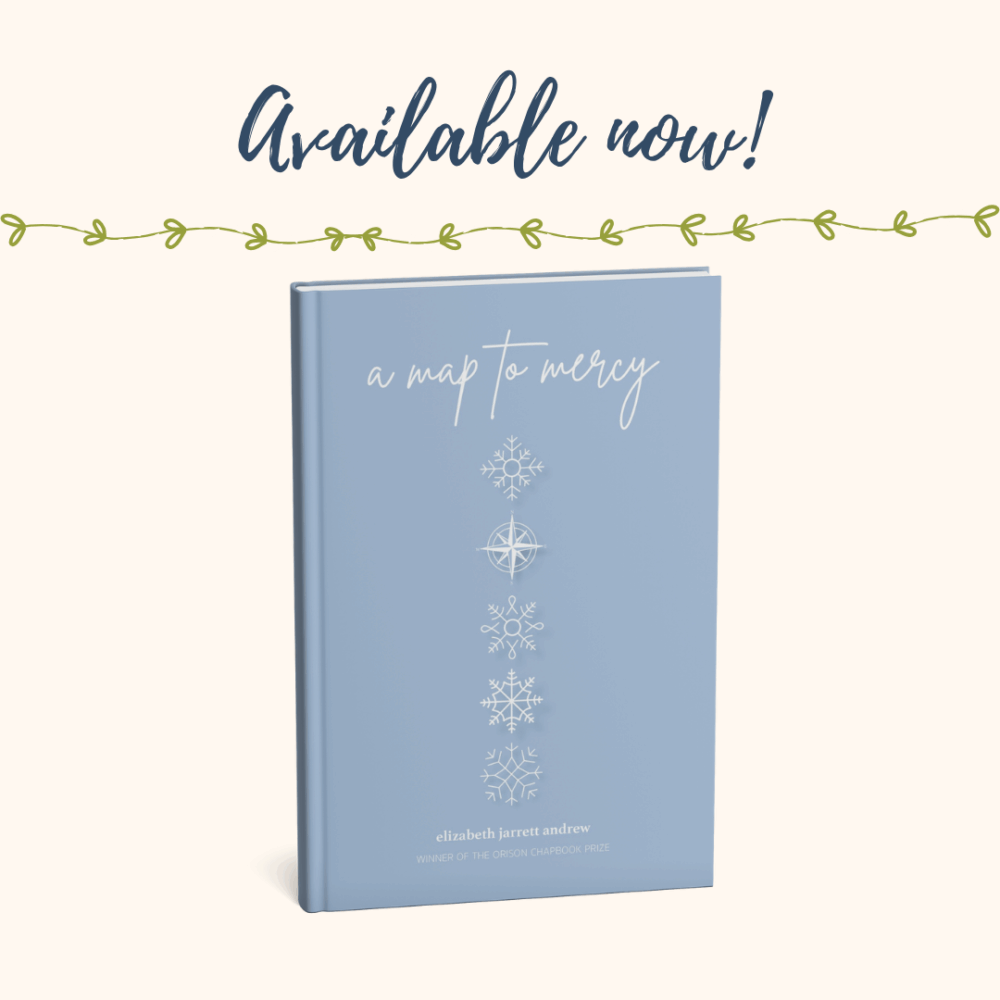
    Then in 2023 I saw a call for submissions to Orison Books’ chapbook contest. Orison is an archaic word that means “prayer.” “The best spiritual art and literature call us to meditate and contemplate, rather than asking us to adopt any ideology or set of propositions,” Orison writes in their mission. “This type of art evokes the human experience of transcendence and explores the mysteries of being, and in so doing opens our minds and hearts to the divine and the possibility of becoming the fullest humans we can be.” Orison articulates what I’ve always hoped my writing might accomplish. I submitted the essay.

    And won. Two years later, the chapbook is in print. I’m reeling with wonder that anyone, friends or strangers, might join me between the bound pages of my prayer practice. It’s dark there, vulnerable and aching. Time slows. I know nothing, am struck dumb, am foolish and broken and faulty. Nonetheless I’m bathed in mercy, as we all are. Today I’m grateful beyond words, which perhaps was the point all along.

    You can order the book here!

    —Elizabeth Jarrett Andrew

  • Books Recommended by Readers

    Books Recommended by Readers

    The following list is compiled from readers of my 2024 Year in Books list, which you can read here, and from members of the Eye of the Heart Center for Creative Contemplation’s Writing Community. If you’re looking for fellow readers and writers, I’d love to see you there.

    Reading means to be ready to catch a voice that makes itself heard when you least expect it, a voice that comes from an unknown source, from somewhere beyond the book, beyond the author, beyond the convention of writing:  from the unsaid, from what the world has not yet said of itself and does not yet have the words to say.

    –Italo Calvino, If On a Winter’s Night A Traveler

    We need books as emissaries from the realm of the unsaid. Thanks to the many responses to my January newsletter, The Year in Books, I now have a reading list for 2025! I thought I’d share folks’ suggestions, along with links to Bookshop, an online bookstore that supports independent booksellers and authors.  If you don’t have a local shop, this year please consider buying your books in a way that creates a healthy literary ecosystem.


    Little Miseries by Kimberly Olson Fakih is a woefully under-appreciated novel. It stunned me in the best way. –Amy Rea


    Time of the Child by Niall Williams. I LOVED this book because of all the love on these pages. Quirky love. Unrequited love. Returned love. Love with hope. Love just because…  –Nancy Agneberg


    Elizabeth Strout’s Tell Me Everything. – I love pretty much everything she’s written precisely because she loves her characters and lets them speak. This book has a really interesting, compassionate voice.

    My other top reads for this year are Question 7 by Richard Flanagan – a book he confesses was hard to write (always a good sign). And I discovered Clare Keegan and her short novellas, Small Things Like These being my top pick. –Cath James


    Two books I read somewhat recently and loved Elizabeth Strout’s latest: Lucy by the Sea and Tell me Everything. I love everything by Elizabeth Strout. –Meck Groot


    Two books I have found un-put-downable lately are:
    1. The Book of Lost Names by Kristin Harmel. Mister Rogers always said that in difficult times, we should “look for the helpers.” So heartening to read this book and see so many brave people resisting oppression in creative ways.
    2. Never Caught: The Washington’s Relentless Pursuit of Their Runaway Slave, Ona Judge by Erica Armstrong Dunbar. Dunbar is a distinguished professor of Black Studies and History at the University of Delaware; she also wrote a young reader’s edition of this book for middle grade.  –Nancy Sinsheimer


    Did you try The Sentence or Future Home of the Living God by Louise Erdrich? What about The Salt Path by Raynor Wynn? Spiritually speaking, there’s nothing like No Mud, No Lotus or No Death, No Fear, by Thich Nhat Hanh and David Michie presents an accessible version of the ancient Santedeva’s would-be Boddhissatva’s Guide. And while maybe not literary quality, his book Instant Karma I found to be fascinating and inspirational just for its lessons into human behavior. –Lisa Dietz


    One is Virginia’s Apple: Selected Memoirs by Judith Barrington. The other is Broken Open: Essays by Martha Gies. Both writers turned 80 this last year, and lost one or both parents while older teenagers.  Barrington’s journey starts in the UK and ends in the Pacific Northwest, where she and her partner were involved in second wave Lesbian Feminist activism and the development of Flight of the Mind Summer Writing Workshops for Women stretching over 17 years, and spawning a women’s literary community and herstory that will outlive them both. I published a review in Calyx Journal.

    Martha Gies’s memoir charts her unusual childhood in rural Oregon, her lifelong search for love from a childhood religious rebellion to a mature understanding and embrace of spirituality through liberal Catholicism, admitting that she worshipped “at the temple of sexual love” while finding her way to “right livelihood” as a writer, teacher, and beloved mentor. Without ever stooping to gossip, she describes her personal fascination with “pillow talk” as being one of the “few greater treasures to pursue than the understanding of the human heart.”  –Mimi Wheatwind


    Some favorites of mine this year:
    The Life Impossible by Matt Haig
    Here One Moment by Liane Moriarty
    On Tyranny by Timothy Snyder
    The Puppets of Spelhorst by Kate DiCamillo
    Pachinko by Min Jin Lee
    –Tom Glaser


    The 100 Years of Lenni and Margot by Marianne Cronin. Also love Margaret Renkl nature stuff. –Barbara Hassing


    Have you read The Wisdom Way of Knowing by Cynthia Bourgeault? or The Power of Now by Ekhert Tolle? Both are slim but powerful volumes.

    On a lighter note: my other book group really enjoyed the Heaven and Earth Grocery Store by James McBrideDictionary of Lost Words by Pip WilliamsCovenant of Water by Abraham Verghese and authors Claire Keegan and Niall Williams. –Barbara Hassing


    Memoir by Reggie Harris, Searching For Solid Ground.  –Pat Evans

    Happy reading!
    —Elizabeth Jarrett Andrew

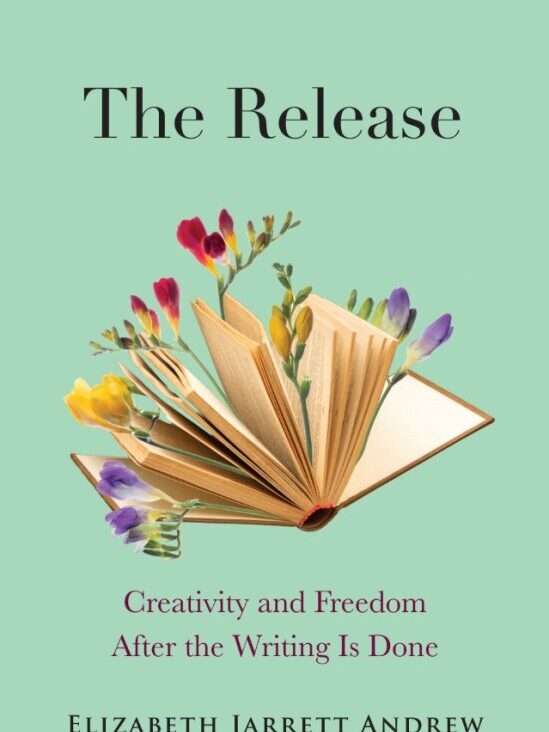
  • Here’s a peek into THE RELEASE, which comes out this October!

    Here’s a peek into THE RELEASE, which comes out this October!

    Your writing projects are your babies.  Sometimes you dream about them before conception; sometimes they emerge in a passionate rush.  You raise them with care, patience, frustration, labor, and abiding joy.  Like child-rearing, revision is long, arduous, and meaningful.  Often it seems the kid will never grow up. 

    Then your baby is grown.  The project is complete—more or less.  It is of you but is decidedly not you because it has an essence, a unique identity.  You’ve given it test-runs with readers, so you know it stands on its own.  You love it dearly, but like any parent sending a teenager off to school or cutting a twenty-something loose from the purse strings, you show that love best by releasing it.

    Comparing writing to child-rearing (which, as a mother, I’m qualified to do) has helped me see that the mistakes I’ve made launching work have sprung from one incorrect assumption:  I thought creativity ended when the project was finished.  But now I see three distinct stages in the creative process.  In the first stage, we generate; in the second, we revise; in the third, we release.  The release begins with the completion of a project and ends when the artist is no longer actively involved with that project, which might be in a year or two or never.  Once your child is a full-fledged adult, your responsibilities decrease significantly while your love continues and, ideally, grows.  The release is that period in which you parent your adult project.

    Essentially our work during the release is to share the story’s essence, its life-force, with others.  We can do this by obvious means, passing along the text.  But that essence also resides inside of our bodies, so we can release our work subtly with our very being.  Publishing, while it often augments a work’s influence, is not necessary for an effective release.  And for those who do want or need to publish, the hidden dimensions of sharing that life-force, through our presence, relationships, and personal choices, are critical to releasing well. 

    Now when I finish a piece, I’m aware that two vessels carry the spark I so want to pass into the world:  my words and myself.  The release is the stage when we writers share the soul of our project—its gift.

    Read more about The Release: Creativity and Freedom After the Writing Is Done and order here!

  • Writing in the Cloud of Privacy & Unknowing

    Writing in the Cloud of Privacy & Unknowing

    Perhaps because my first big writing project gave me room to articulate my sexual longings, come out bisexual, and figure out the implications for my Christian faith; perhaps because I’m drawn to spiritual and therefore intimate subjects, my first drafts (and often second and third) I tend to write for no one but me.  Of course this blog is an exception; I’m very much thinking of you, dear reader!  The middle grade novel I’m plugging away at is for my daughter and my books on craft are for writers, so I’m well aware of when and how readers influence my solitary time at the writing desk.  Frequently, however, I move from my journal to a project notebook to the computer, preserving what I call my “cloud of privacy and unknowing.”  I think of it as a psychic space where I can inhabit completely the mystery of what’s emerging, without concern for others. 

    With practice the boundaries around this space have strengthened.  I’m more fearless, probing, truthful, experimental.  The pressure to produce has diminished, and my patience for each project’s slow evolution has increased.  Sure, I’m just as committed to the literary art, but now in service of my subject and my heart’s curiosity rather than any reader.  I’ve had fun.  I’m writing better than ever.  I’m producing pieces that are less and less publishable—too risky, too Christian, too interior—but also care less when they don’t make it into readers’ hands.  Some I choose never to send out.

    I borrow the “cloud of unknowing” metaphor from an anonymous 14th century mystic who used it to describe silent prayer.  If you substitute his masculine God language with “audience” or, as I do, a sense of union with the Other, he accurately describes my experience of writing:

    When you first begin, you find only darkness, and as it were a cloud of unknowing.  You don’t know what this means except that in your will you feel a simple steadfast intention reaching out towards God.  Do what you will, this darkness and this cloud remain between you and God, and stop you both from seeing him in the clear light of rational understanding, and from experiencing his loving sweetness in your affection.  Reconcile yourself to wait in this darkness as long as is necessary, but still go on longing after him whom you love.  For if you are to feel him or to see him in this life, it must always be in this cloud, in this darkness.  And if you will work hard at what I tell you, I believe that through God’s mercy you will achieve this very thing.  

    About ten years ago, I was so blown open by a dream and unsettled by what was transpired afterward in prayer that I began an essay.  Narrative essays, with their cadence and thrust, their capacious generosity, I knew could usher me into the fiery core of my questions.  For years I shared this project with no one, not even my trusty writing group.  It was too secret, too embarrassing, too Christian.  When I realized I was withholding this dimension of my prayer life from my spiritual director (because the process itself was as much prayer as the meditation I was describing), I let him read it.  Four years ago I finished.  At 8000 words, with quotes from the Bible and theologians and my contemplative teachers, I assumed it was unpublishable and tucked it away.  Other than my spiritual director, no one laid eyes on it.

    In the intervening years I’ve grown into the essay’s insights.  The boldness gleaned in that cloud of privacy has spilled into my teaching, my friendships.  What once felt embarrassing is now a truth I share frequently.  So when I saw Orison Press’s chapbook contest, I submitted the essay.

    And won.  Now I’m reeling with wonder that anyone, friends and strangers, might join me between the stapled pages inside my sweet cloud.  It’s dark there and aches for that which we most love.  Time is so slow or fast we can’t sense its passage.  We know nothing, feel nothing, are struck dumb, and nonetheless, unfathomably, are bathed in mercy.  What else can I do but bow down in gratitude?

    – Elizabeth Jarrett Andrew

    PS: Read more about this award & see upcoming offerings and events here!

    Photo by Yoann Boyer on Unsplash

  • What’s at Stake?

    What’s at Stake?

    After a year of drafting my first young adult novel, I ran it past my trusty writing group (of twenty-five years!) and was unsurprised at their critique:  The plot doesn’t yet spring from the desires of my characters.  “What’s at stake for them?” my colleagues asked.  “What are their burning passions?  What obstacles do they face?  And what do they stand to lose if they don’t get what they want?”  Great questions.  As a relatively new fiction writer, I’m still learning to locate the source of my story’s action in the motivations of my characters.

    In any narrative, what transpires externally must be inextricably linked to the human heart.

    So I’m digging into the psyches of my characters, trying to get to know each of them better.  I ask, “What does so-and-so think she wants?  What does she really want?  If she doesn’t get it, what will the consequences be?  What stands in her way?”  With each scene, I explore what instigates change in my characters, what the internal and external effects are, and why it matters.  I fill notebooks with psychoanalyzing, none of which will appear in the final product, all of which increases my awareness of what’s happening in the story such that every word, sentence, and paragraph is imbued with intention.  I’m becoming more conscious, at least within the bounds of this project.

    This fundamental drive within stories—thwarted desire augmented by high stakes—I find curious.  Is it operative in our lives as well?  Perhaps because I’ve written memoir for so long, I can’t help but apply these questions to my experiences, searching for a plot or through-line that doesn’t only gather my scattershot memories into a unified whole but makes them gripping, a worthwhile “read.”  There’s no question that stories mirror our lives, but are our lives themselves stories, propelled by longing, magnified by conflict, requiring movement inside or out or both in order to find satisfaction?  When I teach essay writing, I often say what makes a good essay is movement.  An essay asks a question, moves in relationship with the question, and lands in a different place, not necessarily at an answer.  This holds true for fiction and, I suspect, our time on this planet.  

    But the stakes with our lives are significantly higher.  The direction of the movement matters.  Is the journey over obstacles toward our deepest desire life-giving or death-dealing?  Does it bring us closer to or farther from the truth?  Does it generate love or hate?  We are the authors of our lives.  We may not get to choose what compels us or what stands in our way, but we can always choose how to respond.  It’s how we exercise human freedom.  We act; we co-create; we determine the plot.  “Aliveness,” Jungian Ann Belford Ulanov writes (and I often quote), “springs from our making something of what we experience and receiving what experience makes of us.”  Isn’t this awesome?!  There’s no other story more worth giving our time.

    –Elizabeth Jarrett Andrew

    Photos by Pure Julia & Pickled Stardust

  • Receive the Blessings of Failure

    There’s an old Taoist story about a farmer whose horse ran away. His neighbors on hearing this came to him and said, sympathetically, “Such bad luck!”

    “We’ll see,” the farmer replied.

    The next day the horse returned, bringing with it three other wild horses. “So wonderful!” the neighbors exclaimed.

    “We’ll see,” the farmer said.

    Then the farmer’s son tried to ride one of the untamed horses, was thrown off, and broke his leg. The neighbors offered their sympathy for his misfortune. (more…)

  • Attending the Lotus

    Vietnamese Buddhist monk and teacher Thich Nhat Hanh tells this story:

    A young man wanted to learn how to draw lotus flowers, so he went to a master to apprentice with him. The master took him to a lotus pond and invited him to sit there. The young man saw flowers bloom when the sun was high, and he watched them return into buds when night fell. Then next morning, he did the same. When one lotus flower wilted and its petals fell into the water, he just looked at the stalk, the stamen, and the rest of the flower, and then moved on to another lotus. He did that for ten days. On the eleventh day, the master asked him, “Are you ready?” and he replied, “I will try.” The master gave him a brush, and although the young man’s style was childlike, the lotus he drew was beautiful. He had become the lotus, and the painting came forth from him. You could see his naïveté concerning technique, but deep beauty was there. (more…)